Elevate Your Impact in Sports Broadcasting: Strategies for Success
Understanding Sports Broadcasting
The Fundamentals of Sports Broadcasting
Sports broadcasting is the dissemination of sports content through various media outlets, including television, radio, and digital platforms. It aims to deliver real-time coverage of sporting events, interviews with players, and analysis from experts. Engaging the audience involves not only providing live commentary but also enhancing the viewer’s experience through graphics, statistics, and interactive content. For more insights on this evolving field, explore Sports Broadcasting.
History and Evolution of Sports Broadcasting
The roots of sports broadcasting can be traced back to the early 20th century when radio began to transform how fans followed their favorite teams. The first live sports broadcast was a baseball game between the Cincinnati Reds and the Philadelphia Phillies in 1921. Over the decades, as television became mainstream, sports broadcasting expanded significantly. Major sporting events, such as the Olympics and the Super Bowl, have evolved into multi-million dollar spectacles, showcasing the integral relationship between sports, media, and culture.
Key Players in the Sports Broadcasting Ecosystem
The sports broadcasting landscape involves a variety of stakeholders, including networks, production companies, leagues, teams, and advertisers. Major television networks invest heavily in broadcasting rights, ensuring exclusive coverage of key events. Production companies specialize in content creation, bringing stories to life through engaging visuals and media. Meanwhile, athletes and teams play a crucial role in attracting viewership, while advertisers leverage broadcasts to reach targeted audiences, creating a mutually beneficial ecosystem.
Technologies Shaping Sports Broadcasting
Innovative Broadcasting Equipment
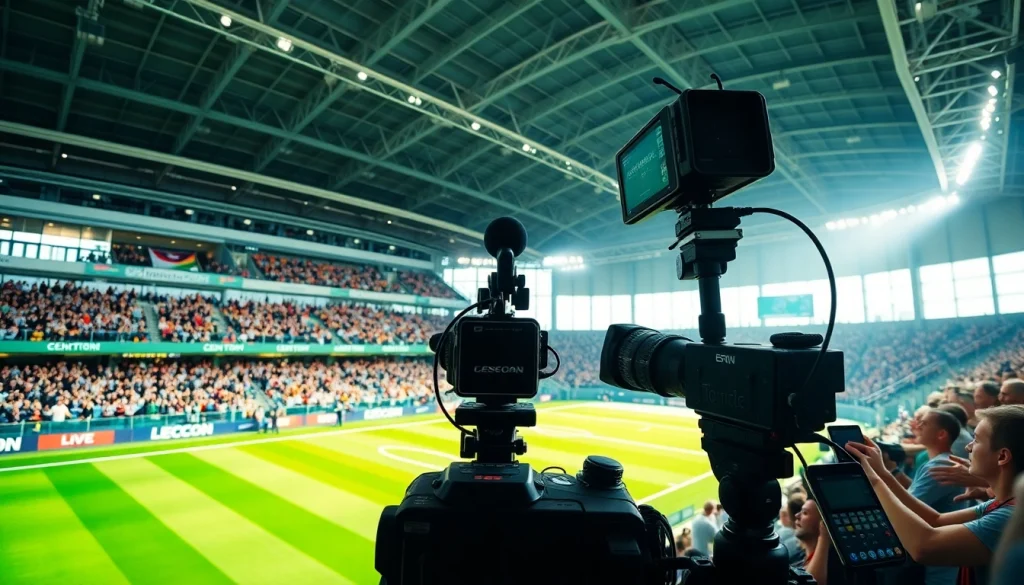
The evolution of broadcasting technology has greatly impacted the quality and reach of sports programming. High-definition (HD) and ultra-high-definition (UHD) formats have become standard, providing viewers with unparalleled clarity. Advanced cameras, such as drones and 360-degree cameras, allow a more immersive viewing experience, capturing angles previously deemed impossible. Integrated graphics systems enhance storytelling by displaying real-time statistics and player bios, further engaging the audience.
Live Streaming Technologies in Sports Broadcasting
As traditional viewership trends decline, live streaming has become a vital component of sports broadcasting. Platforms like Twitch and YouTube have revolutionized how fans consume sports, with many choosing online streaming over traditional cable. Advanced streaming technologies ensure minimal buffering and high-quality playback, enabling audiences to watch live events on a variety of devices. This shift also leads to increased interactivity, as features like chat rooms and social media integration enhance viewer engagement.
The Role of Social Media in Sports Broadcasting
Social media platforms have transformed how sports events are consumed and discussed. They serve as an extension of traditional broadcasting, providing real-time updates and highlights. Fans now engage with their favorite athletes and teams through posts, live chats, and polls. The viral nature of social media also allows for swift sharing of key moments, broadening the reach of sports content and enhancing engagement among younger audience segments, further illustrating the shift in viewer behavior.
Creating Compelling Content
Storytelling Techniques in Sports Broadcasting
Effective sports broadcasting hinges on compelling storytelling. Narratives that delve into athletes’ backgrounds, team rivalries, or pivotal moments within games create deeper emotional connections with viewers. Utilizing techniques such as flashbacks, player interviews, and behind-the-scenes access, broadcasters provide context, helping audiences understand the stakes of each game. Good stories not only elevate the viewing experience but also keep audience interest high, leading to increased viewership.
Engaging Your Audience through Real-time Updates
In the era of instant gratification, timely updates are crucial. Viewers expect real-time information, whether it is scores, player stats, or injury details. Sports broadcasters must leverage technology to provide up-to-the-minute updates, using social media, mobile applications, and traditional broadcasts to keep fans informed. This commitment to immediacy fosters a sense of loyalty and keeps the dialogue between viewers and broadcasters active, enhancing overall engagement.
Utilizing Data Analytics for Enhanced Content
Data analytics plays an essential role in modern sports broadcasting. By analyzing audience preferences and behavior, broadcasters can tailor content to better meet viewer expectations. This data-driven approach helps identify popular segments, influencing programming decisions and enhancing engagement strategies. Moreover, in-game analytics offer viewers insight into player performance and strategy, transforming how fans appreciate and understand the game.
Challenges in Sports Broadcasting
Navigating Rights and Regulations in Sports Broadcasting
The sports broadcasting industry grapples with complex rights and regulations. Securing broadcasting rights often involves substantial financial investments, negotiations, and adherence to regulations governing content distribution. Networks must navigate a landscape filled with exclusivity clauses, regional restrictions, and changing legislation, making it essential for stakeholders to stay updated on evolving rules to avoid penalties and ensure compliance.
Adapting to Changing Viewership Habits
The shift in viewership habits presents significant challenges for sports broadcasters. With younger generations gravitating towards on-demand content and personalized viewing experiences, traditional broadcast methods are increasingly being scrutinized. Broadcasters must innovate and adapt, offering diverse options, including on-demand viewing and customized content packages, to cater to evolving preferences and maintain relevancy in a competitive landscape.
How to Overcome Technical Challenges
Technical challenges can impede even the best sports broadcasts. Issues like poor connectivity, equipment malfunction, or software glitches can disrupt live events and impact viewer satisfaction. To mitigate these risks, broadcasters should invest in robust technology infrastructure, conduct thorough pre-event testing, and have contingency plans in place. Continuous training of personnel can also help prepare teams to quickly resolve unexpected issues, ensuring high-quality broadcasts.
Future Trends in Sports Broadcasting
Emerging Technologies to Watch
Looking to the future, several emerging technologies have the potential to reshape sports broadcasting. Augmented reality (AR) and virtual reality (VR) are poised to create immersive experiences that transport fans to the action, whether they are in the stadium or at home. Additionally, artificial intelligence (AI) can enhance content creation through automated highlights and personalized recommendations, revolutionizing how audiences engage with their favorite sports.
The Rise of E-Sports Broadcasting
E-sports broadcasting has surged in popularity, establishing itself as a competitive counterpart to traditional sports. Events featuring popular games now draw millions of viewers, compelling broadcasters to adapt their strategies. This includes utilizing similar broadcasting techniques from traditional sports, engaging with gamers through interactive polls, and providing comprehensive coverage of both live events and community happenings to capture this new audience demographic.
Predicting the Future of Fan Engagement
Fan engagement is set to evolve dramatically in the coming years, driven by technological advancements and changing expectations. Traditional fan experiences will blend with digital interactions, enhancing immersion and personal connection. Expect increased use of mobile applications for interactive game features, direct communication with athletes, and more personalized viewing options. Ultimately, the sports broadcasting sector must continually innovate to keep fans invested and engaged.
FAQs
What is sports broadcasting?
Sports broadcasting involves the transmission of sports events through various media, including television, radio, and digital platforms, aiming to deliver live coverage and related content.
How has technology impacted sports broadcasting?
Technology has transformed sports broadcasting by improving viewing quality (e.g., HD and UHD), enabling live streaming, and enhancing viewer engagement through social media and real-time data analytics.
What are common challenges in sports broadcasting?
Challenges in sports broadcasting include navigating complex rights and regulations, adapting to changing viewership habits, and overcoming technical issues during live events.
How important is audience engagement in sports broadcasting?
Audience engagement is crucial, as it fosters loyalty, boosts viewership, and enhances the overall viewer experience through interactive content and real-time interactions.
What trends should I look out for in sports broadcasting?
Key trends include the rise of e-sports broadcasting, increased use of AR and VR tech, personalized content offerings, and more engagement strategies that focus on viewer preferences.